
Your Partner in Continuous Improvement
Footwear is one of the most variable and least standardized control points across the process map; contributing to cross-contamination in food processing and storage facilities by tracking bacteria like Salmonella, Listeria, and E. coli from lower-hygiene zones (or outdoors) into critical processing areas.
Helps reduce microbial contamination in facilities when used as directed
The High Cost of "Minor" Lapses
- Direct recall and destruction costs
- Overtime and rework
- Lost production days and capacity
- Chargebacks or loss of private-label contracts
- Higher insurance premiums and litigation expense
Environmental Risk Control
Why Shoes Matter: The Hidden Vector
In food-processing environments, shoes and boots often move from raw-material receiving, loading docks, or general circuits into clean production zones. These shoes carry bacteria, fungi, and viruses picked up along the way.
Without dedicated footwear hygiene, even a single employee or vendor can introduce pathogens like Salmonella, Listeria, E. coli, and Cronobacter, threatening product safety, HACCP compliance, and ultimately brand integrity.
What UV-C + Ozone Shoe Treatment Delivers
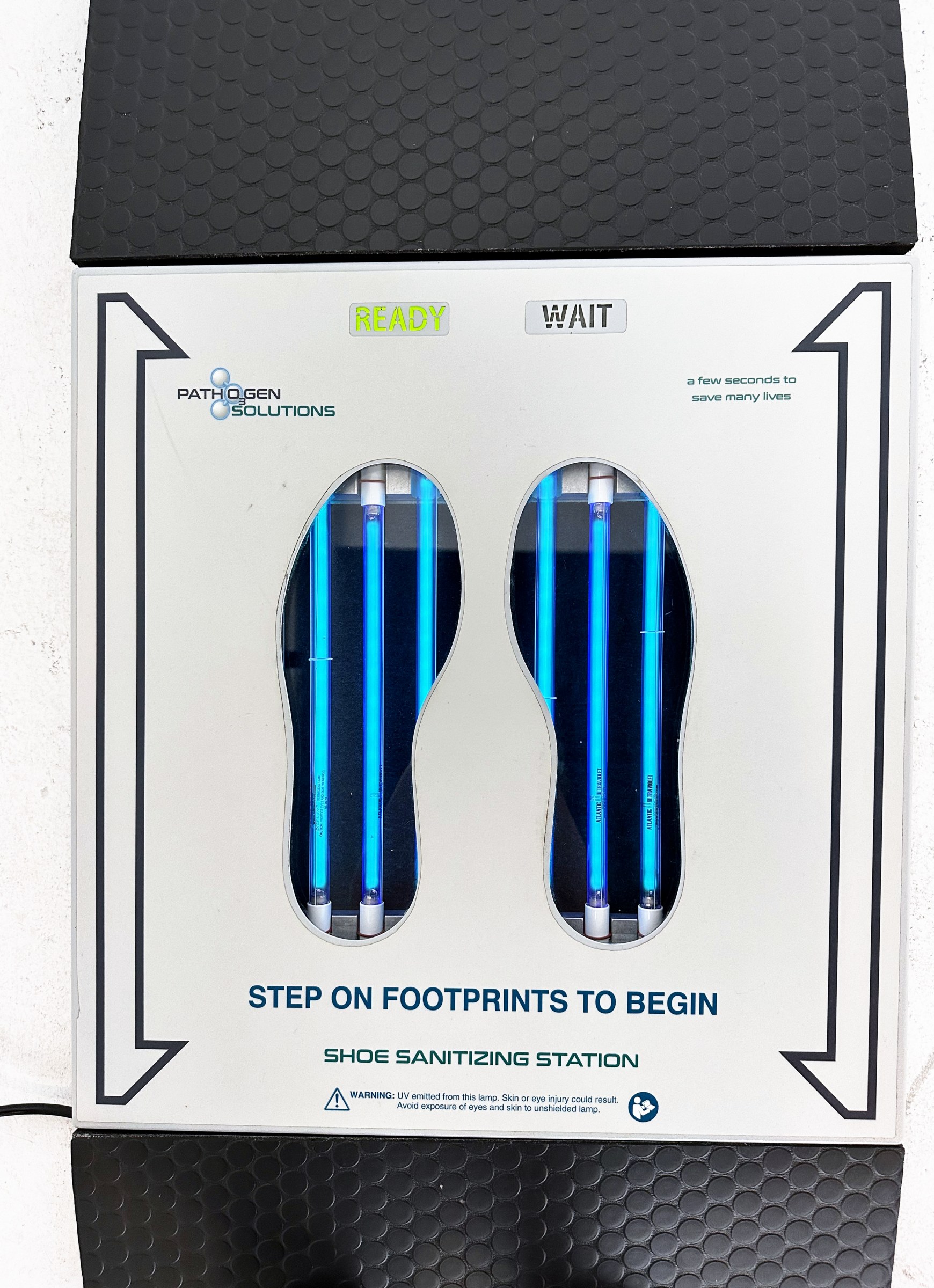
A device that uses UV-C and ozone to sanitize shoe soles
UVZone® treats the undersides of shoes during an activated treatment cycle. It does not continuously treat the room, the facility, or the footwear after the user steps off the station.
A valid comparison requires your facility's actual cover use, purchase prices, labor, storage, waste, dispenser costs, procedures and the controls that will remain in place. Our Sales team can prepare a comparison using current approved pricing and documented assumptions. No savings or return on investment is guaranteed.
Scalability & Low Disruption to Workflow
UVZone® uses a standard 8-second treatment cycle. Both shoe soles are treated during the same activated cycle.
It is scalable across multiple entry points (receiving dock, production floor, packaging, lab, etc.), providing broad coverage without renovation, plumbing, or drainage.
Where UVZone Shoe Stations Yield the Greatest Value
Deploy UV-C + ozone shoe stations at:
- Raw material receiving docks (incoming trucks, external personnel)
- Entrances to production floors (especially after breakrooms, restrooms, or external access)
- Transition zones - zones with different risk profiles
- Ready-to-eat (RTE) product zones and final packaging/finished-goods areas
- Laboratories and quality-control zones where microbial contamination could compromise testing or release decisions
If footwear requires physical cleaning, that cleaning step remains necessary. If your procedure requires chemical treatment, shoe covers, dedicated footwear, hand hygiene, personal protective equipment, environmental cleaning, sanitation, traffic controls, or another facility control, that requirement remains in place until the responsible facility team approves a change.
Conclusion
Enhances traditional hygiene protocols
Recommendation
Perform a pilot deployment at 2-3 high-traffic entry points (e.g., raw materials dock, main production floor entry, packaging exit). Track key metrics over 6-12 months: microbial swab data, audit non-conformances, near-misses, sanitation labor hours, and any deviations or product holds. Use this data to build a risk-adjusted ROI model and then scale across facilities as needed.
Application Limits
UVZone® treats the undersides of shoes during an activated treatment cycle. It does not continuously treat the room, the facility, or the footwear after the user steps off the station.
If footwear requires physical cleaning, that cleaning step remains necessary. If your procedure requires chemical treatment, shoe covers, dedicated footwear, hand hygiene, personal protective equipment, environmental cleaning, sanitation, traffic controls, or another facility control, that requirement remains in place until the responsible facility team approves a change.
UVZone® is intended to complement a broader contamination-control, hygiene, infection-prevention, or biosecurity program. It does not independently establish compliance or guarantee a facility-specific result.
Third-Party Lab Verified Efficacy. Selected results shown. Full laboratory reports are available upon request. Testing conducted from 2019 through 2022.
Efficacy claims based on independent laboratory testing. Results may vary based on application conditions. Patho3Gen technology is designed for environmental surface sanitation and is not intended to diagnose, treat, cure, or prevent any disease. Always follow manufacturer guidelines and applicable regulations.