
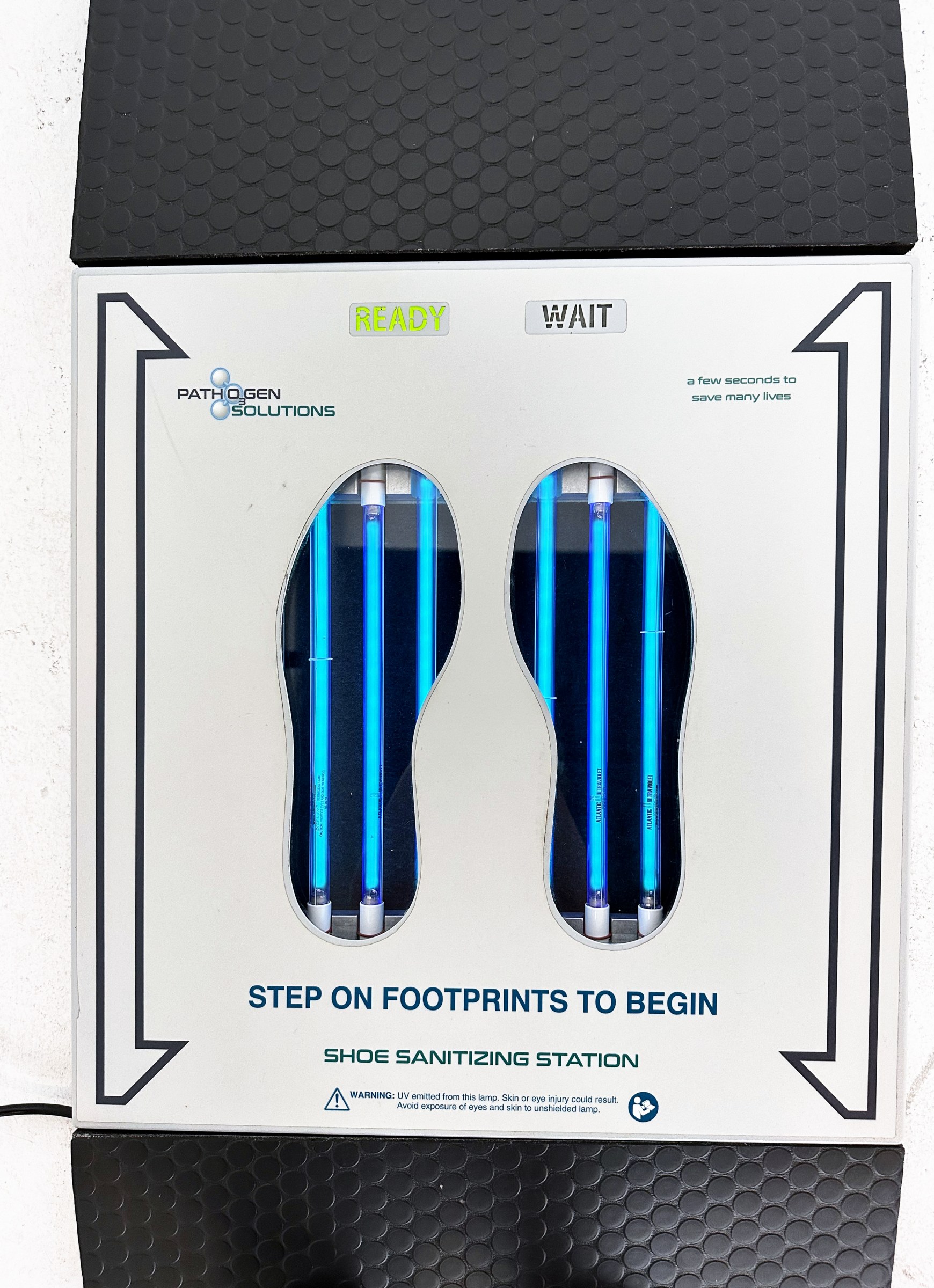
Infection control has become a critical aspect of public health, especially in the wake of recent global pandemics. It encompasses practices, procedures, and policies designed to minimize the risk of spreading infections, particularly in healthcare settings. The importance of infection control extends beyond hospitals to include various industries where hygiene and cleanliness are paramount.
A device that uses UV-C and ozone to sanitize shoe soles
The Goals of Infection Control
Understanding the Infection Control Program
Infection control programs are not merely protocols but a vital part of healthcare and communal environments. These systematic approaches are designed with a singular focus: to prevent the transmission of infections and protect everyone involved. The primary goal of an infection control program is to safeguard patients, staff, visitors, and the community at large from potential infections.
Achieving this goal requires a multifaceted strategy, including:
- Monitoring and Surveillance of Infections: Regular tracking of infection patterns helps in early detection and containment.
- Implementation of Standard Precautions: Adhering to established guidelines ensures consistent practices across all levels.
- Education and Training: Empowering staff with the knowledge and skills to implement infection control measures effectively.
- Continuous Improvement through Assessment and Feedback: Regular reviews and adaptations to meet the evolving challenges of infection control.
Infection Prevention and Control Objectives
The specific goals of infection prevention and control (IPC) are tailored to the unique needs of each setting, reflecting a comprehensive approach to health and safety. Key objectives include:
- Reducing the Incidence of Healthcare-Associated Infections (HAIs): Targeting common sources of HAIs to enhance patient well-being.
- Minimizing the Spread of Antibiotic-Resistant Organisms: Implementing measures to combat the growing threat of resistance.
- Enhancing Patient Safety and Quality of Care: Focusing on overall patient experience and outcomes.
- Complying with Regulatory Requirements and Standards: Meeting and exceeding local and national regulations.
To achieve these goals, strategies and best practices encompass:
- Hand Hygiene Protocols: Promoting regular and proper handwashing techniques.
- Environmental Cleaning and Disinfection: Maintaining cleanliness in all areas, including patient rooms, common areas, and equipment.
- Isolation Precautions for Contagious Patients: Implementing isolation measures when necessary to prevent the spread of contagious diseases.
The Rise of Bacterial Resistance
The challenge of bacterial resistance is a growing concern in the field of infection control. As bacteria evolve and become resistant to existing antibiotics, traditional methods of treatment become less effective. This resistance poses a significant threat to public health, leading to increased mortality rates and healthcare costs.
The implications of bacterial resistance are far-reaching, affecting not only healthcare settings but also the food industry, agriculture, and more. It calls for a concerted effort to develop new and future technologies to combat these superbugs.
Some of the emerging technologies being developed include:
- Phage Therapy: Utilizing viruses that infect bacteria to target specific strains.
- Nanotechnology: Applying nanoparticles to deliver targeted antibiotic treatments.
- Precision Medicine: Tailoring treatments based on individual genetic makeup.
UVZone Shoe Sanitizing Station
Helps reduce microbial contamination in facilities when used as directed
How UVZone Works:
UVZone® uses a standard 8-second treatment cycle. Both shoe soles are treated during the same activated cycle.
Applications in Production, Processing, and Other Industries:
UVZone’s versatility extends beyond healthcare. Its applications include:
- Food production and processing
- Manufacturing environments
- Educational institutions
Infection Prevention in the Workplace
Importance of Infection Control Practices in the Workplace
Infection control practices in the workplace are essential for maintaining a healthy and safe environment for employees, customers, and visitors. The purpose of these practices is to minimize the risk of spreading infections, which can lead to illness, absenteeism, and decreased productivity.
Industry-specific considerations play a vital role in shaping infection control strategies. For example:
- In healthcare, stringent protocols are required to protect patients and staff from Healthcare-Associated Infections (HAIs).
- In food processing, hygiene standards must be maintained to prevent contamination and ensure product safety.
- In educational institutions, cleanliness practices help create a conducive learning environment and reduce the spread of common illnesses.
These examples illustrate the broad applicability and critical importance of infection control across various sectors.
Effective Ways to Prevent Infection
Preventing infection is a multifaceted challenge that requires a combination of traditional methods and innovative solutions. The most effective way to prevent infection includes:
- Regular handwashing and use of sanitizers
- Proper cleaning and disinfection of surfaces
- Educating employees about hygiene practices
- Implementing isolation measures when necessary
- Regular monitoring and compliance with local health guidelines
Enhances traditional hygiene protocols
Application Limits
UVZone® treats the undersides of shoes during an activated treatment cycle. It does not continuously treat the room, the facility, or the footwear after the user steps off the station.
If footwear requires physical cleaning, that cleaning step remains necessary. If your procedure requires chemical treatment, shoe covers, dedicated footwear, hand hygiene, personal protective equipment, environmental cleaning, sanitation, traffic controls, or another facility control, that requirement remains in place until the responsible facility team approves a change.
UVZone® is intended to complement a broader contamination-control, hygiene, infection-prevention, or biosecurity program. It does not independently establish compliance or guarantee a facility-specific result.
Third-Party Lab Verified Efficacy. Selected results shown. Full laboratory reports are available upon request. Testing conducted from 2019 through 2022.
Efficacy claims based on independent laboratory testing. Results may vary based on application conditions. Patho3Gen technology is designed for environmental surface sanitation and is not intended to diagnose, treat, cure, or prevent any disease. Always follow manufacturer guidelines and applicable regulations.