
What kind of bacteria grow in shoes?
Our shoes, while protecting our feet, come into contact with various surfaces - from the sanitized floors of our homes and offices to the dirt-laden streets of our cities. This constant exposure makes them a breeding ground for numerous bacteria and pathogens. Some of the most common culprits include:
- Escherichia coli (E. coli): Often found in fecal matter, it can lead to severe abdominal cramps, diarrhea, and vomiting.
- Staphylococcus aureus: A bacteria that can cause skin infections and, in severe cases, lead to pneumonia or bloodstream infections.
- Enterococcus: Often found in the human gut, certain strains can be resistant to treatment and cause severe infections.
Understanding Shoe Sanitization
In our ever-evolving world, where hygiene has taken center stage, understanding the nuances of sanitization has become paramount. While we’re familiar with hand sanitizers and surface disinfectants, shoe sanitization remains a relatively new frontier for many.
What is shoe sanitizer?
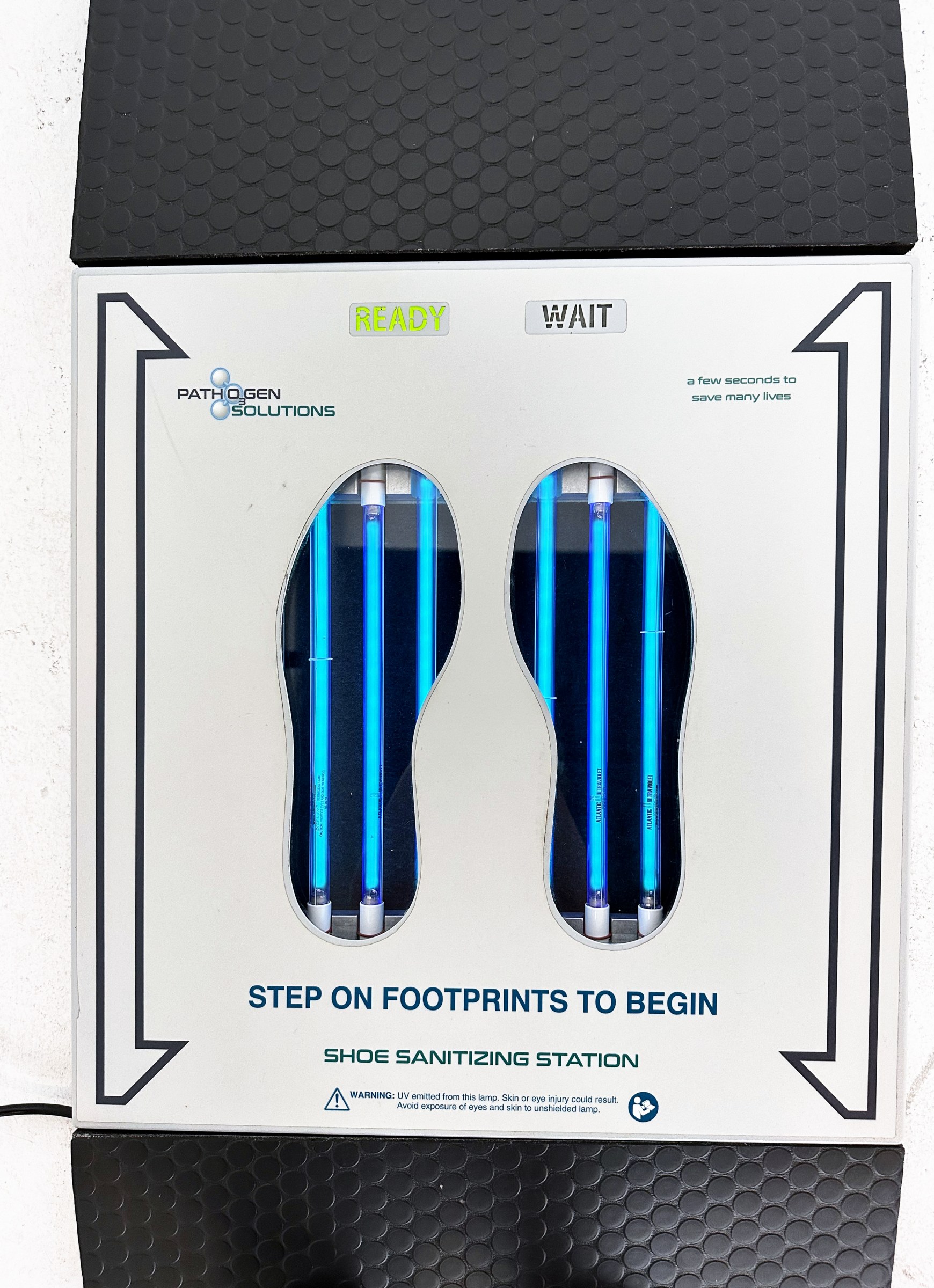
A device that uses UV-C and ozone to sanitize shoe soles
Daily Habits and Best Practices:
- Home Hygiene: Refrain from wearing shoes indoors. This practice not only maintains the cleanliness of your living spaces but significantly curtails the spread of bacteria.
- Shoe Rotation: Make it a habit to alternate between different pairs of shoes. This gives them ample time to air out, reducing moisture and thereby inhibiting bacterial proliferation.
- Regular Cleaning: Actively remove dirt and other visible contaminants from your shoes. Such proactive measures substantially decrease the bacterial presence.
UVZone Shoe Sanitizing Station
UVZone® treats the undersides of shoes during an activated treatment cycle. It does not continuously treat the room, the facility, or the footwear after the user steps off the station.
The Lifespan of Bacteria in Footwear
How long can bacteria live in shoes?
Bacteria are hardy microorganisms, and their lifespan in shoes can vary based on several factors.
Factors Affecting Bacterial Survival:
- Material: Porous materials like fabric can provide a conducive environment for bacteria, while non-porous surfaces like rubber might be less hospitable.
- Moisture: Damp shoes can be a breeding ground for bacteria.
- Temperature: Warm conditions can accelerate bacterial growth.
Given these factors, some bacteria can survive in shoes for days to weeks.
Application Limits
UVZone® treats the undersides of shoes during an activated treatment cycle. It does not continuously treat the room, the facility, or the footwear after the user steps off the station.
If footwear requires physical cleaning, that cleaning step remains necessary. If your procedure requires chemical treatment, shoe covers, dedicated footwear, hand hygiene, personal protective equipment, environmental cleaning, sanitation, traffic controls, or another facility control, that requirement remains in place until the responsible facility team approves a change.
UVZone® is intended to complement a broader contamination-control, hygiene, infection-prevention, or biosecurity program. It does not independently establish compliance or guarantee a facility-specific result.
Third-Party Lab Verified Efficacy. Selected results shown. Full laboratory reports are available upon request. Testing conducted from 2019 through 2022.
Efficacy claims based on independent laboratory testing. Results may vary based on application conditions. Patho3Gen technology is designed for environmental surface sanitation and is not intended to diagnose, treat, cure, or prevent any disease. Always follow manufacturer guidelines and applicable regulations.